
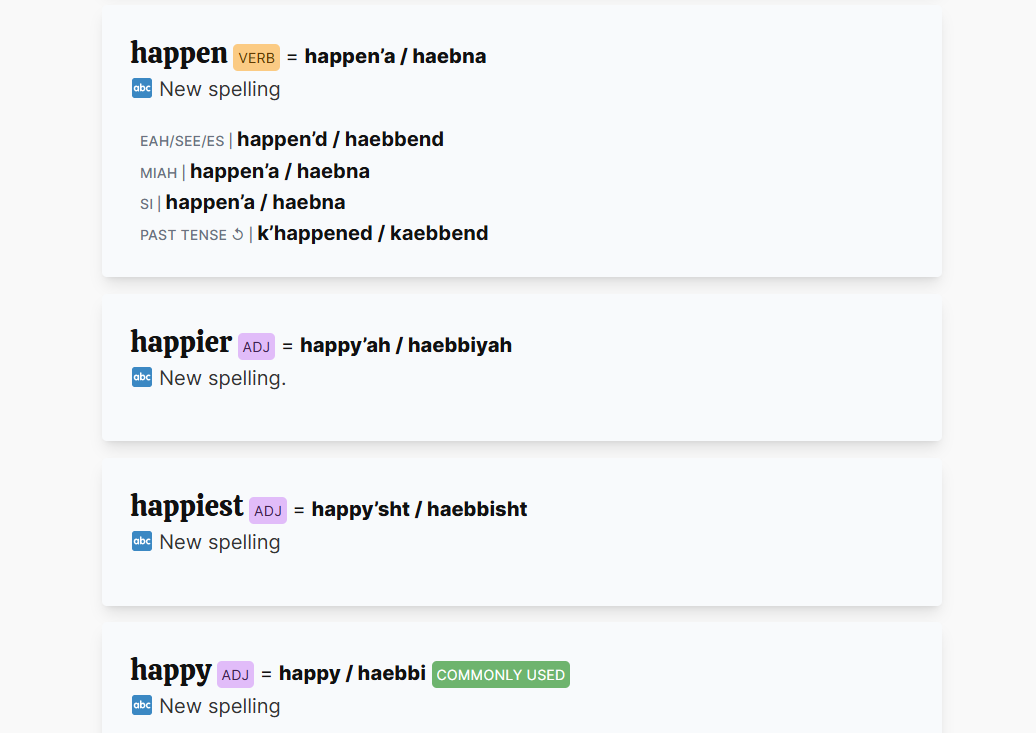
This guide explains the new spelling for English words in Pennsylvania Dutch, with examples showing what has changed and why.
Languages continue changing. So does the way words are spelled.
💡These spelling changes are for native Deitsh speakers to help them read their own language easier. This change may take time for those familiar with the previous spelling to get used to.
Why Change Pennsylvania Dutch Spelling?
The goal of anything that’s written down is to be read and understood. Native Deitsh speakers are not raised learning how to read their own language. Because of this, most Pennsylvania Dutch words are written the way they sound.
Modern Pennsylvania Dutch borrows a lot of words from English. Some of these words are said the same as the English word, while others have Deitsh beginnings or endings added. In the past, these English words have been spelled the way they sound; as Deitsh-ified words. But it’s been noticed that many of these borrowed words trip up native speakers when they’re reading. It’s not the words themselves—it’s how they’re spelled.
Native speakers should be able to easily read their own language, with as few distractions as possible.
What’s Changing—and What Stays the Same
What has changed?
Here are some of the changes:
- Many borrowed English words now use their English spelling.
- Pennsylvania Dutch beginnings and endings are still added as needed:
- Deitsh endings (like -ah and -i) are added to match the pronouns they go with
- Deitsh beginnings (like k- and ge- and g-) are added to past tense words and adjectives as needed
- The difference between ge- and g- at the start of words helps with pronunciation.
- Most spelling changes do not affect how the words are pronounced.
- A few new spellings do not closely match the pronunciation, but help the word be recognizable. These words have pronunciation notes on the Words List.
- Words that are already easy to read keep their current spelling.
Here are some examples of the new spelling changes.
| English Word | Previous Deitsh Spelling | New Deitsh Spelling |
|---|---|---|
| to change | tshaynsha | change’a |
| it is / there is | ’sis | sis (beginning apostrophe removed for easier reading) |
| happy | haebbi | happy |
| to enjoy | enjoya | enjoy’a |
| enjoyed | enjoyt | enjoy’t (ending changed for past tense) |
| happened | kaebbend | k’happened (Pennsylvania Dutch sound added to front of English word) |
| happens | haebend | happen’d (ending ’d added to avoid confusing this with the EN past tense word) |
| to trust | trosta | trust’a |
| trusted | getrost | ge’trust |
| to deal | deela | deal’a |
| safe | sayf | safe |
| safer | sayfah | safe’ah |
| number | nambah | number |
| really | reeli | really |
What has not changed?
The way these words are pronounced has not changed. These are only spelling changes to make it easier to read Pennsylvania Dutch.
These spellings may be adjusted in the future; based on feedback from native speakers.
How do you know which words have changed?
To help keep track of these new spellings of Deitsh words, the Words List has been updated. The Dictionary will be updated in the future as well.
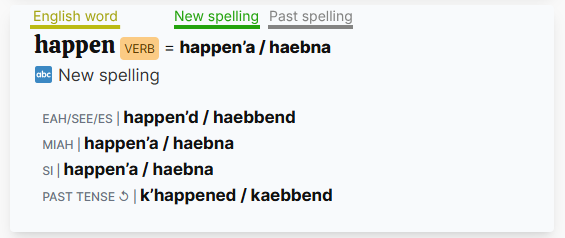
In the Words List:
- Look for 🔤 New spelling on newly updated words
- New spellings for affected words are listed first
- Old way of spelling remains, but listed second
Keeping both spellings listed makes it easy to find words for those used to the older way of spelling, and for those who are reading older publications that were released before these spelling changes.
When will these changes start?
The new spelling for English words in Pennsylvania Dutch is already being used in new items. You will start to notice the changes in upcoming text items. Other printed materials and digital text items will start using the new spelling going forward.